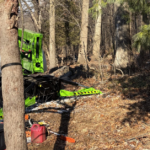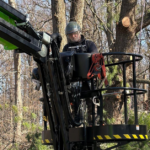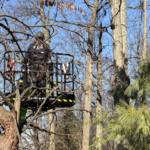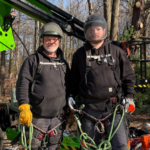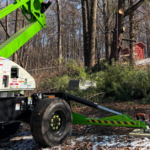
If a tree sits in the path of a construction project, conflicts with a structure, or was planted in the wrong spot years ago, relocating it correctly preserves years of established growth. Mason Dixon Tree and Land Experts provides professional tree transplanting across Cumberland County. Licensed, insured, and owner-operated. The owner evaluates every job personally.
Call now for your free consultation: (717) 493-6900
Relocate Your Tree Before Construction or Redesign Forces You to Lose It
These are the most common transplanting situations we handle across Cumberland County properties.
- A valued shade or ornamental tree sits directly in the path of a planned home addition, garage, or driveway extension.
- A tree was planted too close to a foundation, utility line, or hardscape, and it will create a costly conflict as it continues to grow.
- A landscape redesign requires moving established trees to better positions on the same property.
- A young tree needs to be relocated before its root system becomes too large to survive the move.
- A tree holds significant shade, privacy, or aesthetic value, and removal is not an acceptable outcome without exploring every alternative first.
Not every tree is a viable transplant candidate. We assess size, species, root depth, current health, and destination site conditions before any commitment is made. You receive a direct answer on viability before any work is scheduled.
Which Trees Survive Transplanting and Which Ones Will Not
This is the most important assessment in the entire process. Getting it wrong costs you the tree and the investment.
Strong transplant candidates:
- Trees under four inches in trunk diameter at chest height
- Trees in their current location for fewer than five years
- Fibrous-rooted species, including dogwood, redbud, and serviceberry common on Adams County residential properties
- Healthy trees with no active disease, structural defects, or visible root damage
Poor transplant candidates:
- Trees over six inches in trunk diameter, where capturing sufficient root mass is not achievable
- Deep taproot species, including white oak, black walnut, and hickory common across Cumberland County
- Trees showing active decline or disease that will not recover from transplant stress
- Trees established in their current location for ten or more years
If the tree is not a realistic candidate, we tell you directly before any work begins and give you the most practical alternative.
Why Transplanted Trees Fail and How We Prevent Every One of These Mistakes
Most transplant failures are predictable and preventable. These are the specific failure points professional technique addresses on every job.
- Undersized root ball: Cutting too small severs the majority of active feeder roots. The remaining system cannot support the above-ground structure, and the tree declines rapidly.
- Wrong transplant season: Moving a deciduous tree during active growth forces it to simultaneously support full leaf-out and regenerate roots in unfamiliar soil. Dormant season transplanting eliminates this conflict entirely.
- Incorrect planting depth at the destination: Burying the root flare at the new location is the same critical error that kills newly planted trees. The root flare must sit at or slightly above finished grade.
- Poor destination site preparation: Moving a tree into a poorly prepared hole with incompatible drainage or compacted soil sets up failure before the tree is even settled.
- Insufficient post-transplant irrigation: A transplanted tree has lost a significant portion of its root system. Consistent deep watering during the first two growing seasons is the single most controllable factor in transplant survival.
Our Process Gives Every Transplanted Tree the Best Chance of Long-Term Survival
Step 1: Free On-Site Consultation. The owner evaluates tree size, species, root system condition, current site, and destination site before giving you a direct viability assessment and realistic outcome expectation.
Step 2: Transplant Season Recommendation. We identify the correct window for your specific species. For most deciduous trees across Adams County, late fall through early spring is the right window. Transplanting outside this season significantly reduces survival probability.
Step 3: Preparatory Root Pruning Where Required. For larger candidates, root pruning in the season before the move encourages a compact feeder root system closer to the trunk that survives excavation with far less damage.
Step 4: Written Quote. Clear written estimate before any work is scheduled. What we quote is what you pay.
Step 5: Correct Root Ball Excavation. The root ball is excavated to the correct diameter and depth for the tree’s trunk caliper. An undersized root ball is the most common and most fatal technical failure in tree transplanting.
Step 6: Destination Site Preparation. The new hole is prepared to the correct dimensions before the tree moves. The root flare is positioned at or slightly above the finished grade at the new location without exception.
Step 7: Relocation and Establishment Setup. The tree is moved with equipment appropriate for its size and weight. Backfill, proper mulching, and thorough initial watering are completed before we leave.
Step 8: Owner Walkthrough and Post-Transplant Care Guidance. The owner reviews the completed work with you and provides specific irrigation and monitoring guidance for the full establishment period.
Call to schedule your consultation: (717) 493-6900
Tree Transplanting Costs in Cumberland County
These are the real factors that affect cost on every transplant job we estimate.
- Tree size and trunk caliper: Larger trees require heavier equipment and more preparation time at both sites
- Species root characteristics: Deep taproot species require more careful excavation than fibrous-rooted ornamentals
- Relocation distance: Moving a tree across the full property requires different equipment than a short-distance move
- Destination site conditions: Rocky ground, heavy clay, or poor drainage increase preparation time and complexity
- Preparatory root pruning: Trees needing a root pruning visit in the prior season add a separate service call to the total cost
- Post-transplant staking: Large transplants in exposed positions may require staking during the first growing season
We provide free on-site consultations, so you receive an accurate estimate and honest viability assessment before any commitment is made.
Call for your free assessment: (717) 493-6900
What Cumberland County Homeowners Should Know Before Transplanting a Tree
Tree transplanting in Cumberland County, PA comes with a few local factors that can directly impact whether a tree survives and establishes successfully. General advice doesn’t always account for these conditions.
Cumberland County typically sees its last frost between mid-April and early May. Transplanting too late in spring can expose a stressed tree to unexpected frost during early growth. Timing matters, and transplant windows should always align with local conditions.
Soil is another major factor. Many areas in Cumberland County have dense, clay-heavy soil that drains slowly. Moving a tree into this type of ground without proper preparation can limit root development and lead to failure. Preparing the new planting site correctly is just as important as how the tree is removed.
Spotted lanternfly pressure is also present in the area and can add stress to newly transplanted trees, especially during the growing season. Some species are more vulnerable than others, which makes post-transplant care and monitoring important.
Lastly, the tree of heaven—the primary host for spotted lanternfly—should never be transplanted. Moving it only spreads the problem further across your property and contributes to its ongoing presence in the region.
Why Cumberland County Homeowners Trust Mason Dixon for Tree Transplanting
- Owner present on every job, overseeing the assessment and every step of execution
- Direct, honest answer on viability before any work is committed or scheduled
- Correct root ball sizing and root flare placement on every transplant
- Species-specific timing based on Cumberland County frost dates and soil conditions
- Fully licensed and insured with documentation available on request
- No-surprise pricing guarantee on every written quote
- 15% off any service over $3,000 for new customers
- $100 off same-day hire for new customers
Frequently Asked Questions About Tree Transplanting
What is the best time to transplant a tree in Pennsylvania?
Late fall after leaf drop through early spring before bud break is the best window for most deciduous trees. During dormancy, the tree operates under minimal water and nutrient demand, which dramatically reduces transplant stress. Evergreens transplant best in early fall or early spring when soil temperatures support immediate root activity at the new location.
How large a tree can be successfully transplanted?
Trees up to four inches in trunk diameter are strong hand-transplant candidates. Trees between four and six inches may be viable with mechanical assistance and preparatory root pruning. Trees over six inches have root systems that cannot be captured sufficiently and are generally better replaced with a new planting. We give you a direct answer during the consultation.
Can oak trees be transplanted?
Established oaks develop deep taproots that make successful transplanting extremely difficult beyond the first two to three years of growth. Young oaks under two inches in trunk caliper can sometimes be moved successfully with the correct technique. Large established oaks are rarely viable candidates, and we give you a direct recommendation after individual assessment.
What is transplant shock and how serious is it?
Transplant shock is the stress and reduced vitality a tree experiences following relocation due to root system loss during excavation. Mild shock resolves within one growing season with proper post-transplant irrigation. Severe shock from incorrect technique, wrong season, or inadequate irrigation can be fatal within one to three seasons.
How much water does a transplanted tree need during establishment?
Consistent deep watering during the first two full growing seasons is the most important factor in transplant survival. Most transplanted trees require ten to fifteen gallons per week during dry periods in the first season. We provide specific watering guidance based on your tree’s size, species, and destination soil conditions during the owner walkthrough.
Can you transplant a tree to a different spot on the same property?
Yes. Same-property relocation is the most common transplanting scenario we handle across Cumberland County. It follows identical assessment, timing, and technique requirements as any other transplant, regardless of the distance involved.
Will transplanting disturb my lawn?
Excavation at both the source and destination will disturb the surrounding turf. We minimize lawn damage throughout the process and leave both areas as clean as possible. Lawn restoration at the source excavation site is the homeowner’s responsibility unless specifically included in the written quote.
What trees should never be transplanted?
The tree of heaven should be removed, not transplanted. Large established oaks, hickories, and black walnuts are rarely viable candidates. The Bradford pear should be removed entirely and not replanted anywhere on the property. Any tree showing active disease, significant decay, or structural failure is not a transplant candidate, regardless of size or species.